Peter Canavan column: GAA and the recession
April 08, 2009
Turnstiles at Pairc Tailteann Navan
The euphoria generated these past few weeks by the football and hurling leagues will surely help us cope with this extended winter we seem to be having and the debate whipped up by the introduction of these new rules will keep us busy when the quality of the football fails to stimulate us.
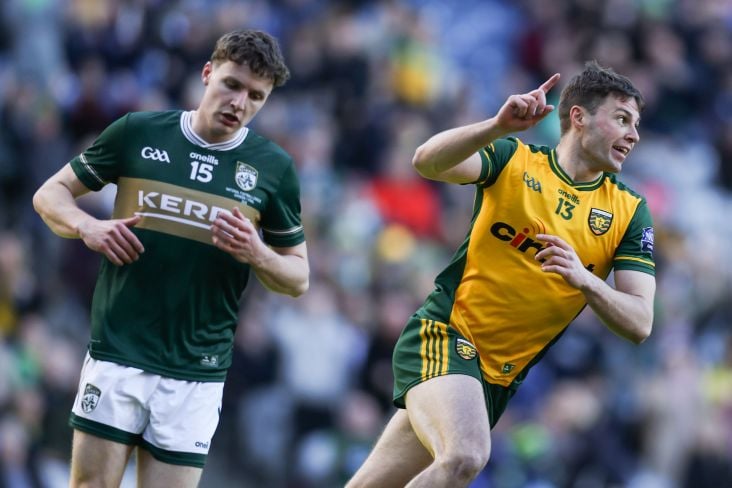
The foul weather we experienced in early March led to some poor games (e.g. Tyrone v Galway,) and hindered us in making like for like comparisons with scoring statistics for last year. There was still some fine games played out (like Derry v Kerry or Donegal v Dublin) and some high scores were also recorded despite the elements; Kildare 2-16, Mayo 1-13, Monaghan 1-13. If nothing else it helped us forget about all the doom and gloom surrounding the country at present, at least for the weekend. But as the Celtic Tiger whimpers into a darkened corner somewhere we all tentatively begin another week and steel ourselves for the impending struggle ahead whilst all the time praying that our own little nest remains sheltered and snug from the prevailing wind of change currently sweeping the land.
What a fantastic growth Cumann Luthchleas Gael has experienced these past twenty years or so. In the 125 years of our existence I doubt if the association would have experienced such a spurt of growth over a similar period of time anywhere in its history. Certainly there were times when patriotic fervour was at it's height that Cumann Luthchleas Gael took on a more important role than that which it currently enjoys. Throughout the middle decades of the twentieth century almost everybody in the country, certainly the vast majority of nationalists, were associated with the GAA one way or another but as the century moved on the numbers would have declined. To simply quote attendance figures or membership figures to draw comparisons over the years would give skewed results. Almost every decade brought different factors that were to effect the Association in a variety of ways thus leaving it difficult to make comparisons. Emigration, the growth of soccer, the 'troubles', the growth of rugby, television, Sky, recession, prosperity, et al. Politics and the socioeconomic status of the people continually affected the GAA. With the implementation of The Good Friday Agreement and the birth of the Celtic Tiger we suddenly had around us fertile ground upon which we could nurture and develop like never before. Thankfully, we had the leaders with foresight and diligence who were fit to take advantage of this fruitful time.
No doubt, as the Celtic Tiger grew so too did the GAA, both socially and financially. Although other sports had similar upturns, most significantly rugby, soccer and golf, nothing compared to the GAA. The Association seemed to lose that old-fashioned image (an image held mainly by those of a more upper class standing). It was now cool to be in the GAA (pronounced gah). Mothers in their four wheel drives all over the country were leaving their little pets to training; lady footballers, tanned and elegant, were taking to the fields; training camps abroad were commonplace; players were getting government grants; the crowds were back (especially families). A boom time indeed. A time to look back on and say what a great time it was to be physically there.
While we can clearly recognise a parallel growth between the national economy (North and South) and Cumann Luthchleas Gael what can we expect to see now that that the sudden downturn has thrown the whole island into financial turmoil? Will there be a similar parallel showing a downward trend? I'm afraid it is inevitable.
The scourge of unemployment and loss of income that has coldly knocked on the door of so many homes in recent months is not selective. Gael or non-Gael, it doesn't care.
The hardships that have befell so many people already must surely have an impact somewhere down the line for the GAA, be it a fall in attendance figures, loss of membership or loss of sponsorship, it is bound to have a negative effect overall. I know we are a strong people, a strong organisation, resilient. We can survive the hard times that come along every now and then. In my mind we have survived worse in the past.
Confidence in our own stamina is not enough, though. Just as we had astute leaders who were able to guide us on the back of the tiger we must now look to those same leaders to guide us through this rough spell. I think we have to collectively be aware of the problems that this massive rise in unemployment is causing our fellow members. Once again emigration is raising its ugly head and there are many instances of players having to move away for the sake of employment. Eamon McEneaney (Louth), John Joe Doherty (Donegal) and Seamus McEnaney (Monaghan) have already expressed concerns about unemployment and how it could affect their counties. Several club players in Tyrone have suggested moving while some young lads who went to Australia for a couple of months are now thinking about staying for at least a year. Australia (apparently the new favourite) England, America, New Zealand - all possible destinations for the unemployed. Has the GAA got a moral responsibility to help its members in times of hardship? I believe so. I also believe we, as part of the Association, have a responsibility to hold out a helping hand. Let's prompt our leaders to help. Perhaps a little protectionism in GAA circles is morally acceptable. Perhaps our local clubs can make an effort to secure employment for a player who may be thinking about leaving. It could escalate into quite a problem so let's all be aware and let's all show support where possible.
New rules in operation
The inclement weather we experienced in early March didn't leave the referee's job any easier. Having to implement the experimental rules while trying to allow for weather conditions caused a few problems for the men in black if we were to listen to some reports. A few managers have voiced their concerns about some of the refereeing decisions and others have reiterated their dislike for the new rules regardless of how the referee performs. Some of the decisions questioned relate to the referee's interpretation of the new rules which resulted in yellow cards and the resultant sending offs.
In a previous article I suggested that the introduction of the new rules may lead to better defending or the development of more skilful defenders owing to the fact that certain fouls would carry severe penalties. This may well have proven the case provided all games had been played under the same conditions as the Tyrone v Dublin opener, played with the same spirit, and refereed as well as Martin Duffy did that night. (Martin refereed it well because he did not play to the letter of the law but instead he used his discretion and played to the spirit of the game).
Unfortunately, it is seldom that all of these criteria will be met during the course of one match. Yellow cards have been issued for so many innocuous tackles that defenders are now hesitant to make that big legitimate hit for fear he will receive a straight yellow. Under the new rules teams can still stifle good attacking teams just by smothering their defence with players. If the aim of the experimental rules is to speed up the game and make it more exciting then why not try a different approach - 13-a-side football.
I believe that by reducing the size of the teams the extra space provided would allow for a more free flowing game and certainly should result in higher scoring averages. More emphasis would have to be placed on man-to-man marking thus helping eliminate the crowded defences that are so prevalent at the minute. It may also help do away with the short passing game that some teams currently abuse. We would see a lot more movement among the front players and conditions would allow the more talented footballer a better chance to express himself. No new rules would be needed, just a no-nonsense referee, with diligent officials, who is prepared to let things flow and who is prepared to punish severely when the incident demands. But, for now, we will keep a close eye on the new rules for the remainder of the league and form our conclusions at that time.
Most Read Stories