Sligo's Seever's enjoys that winning feeling
December 26, 2008
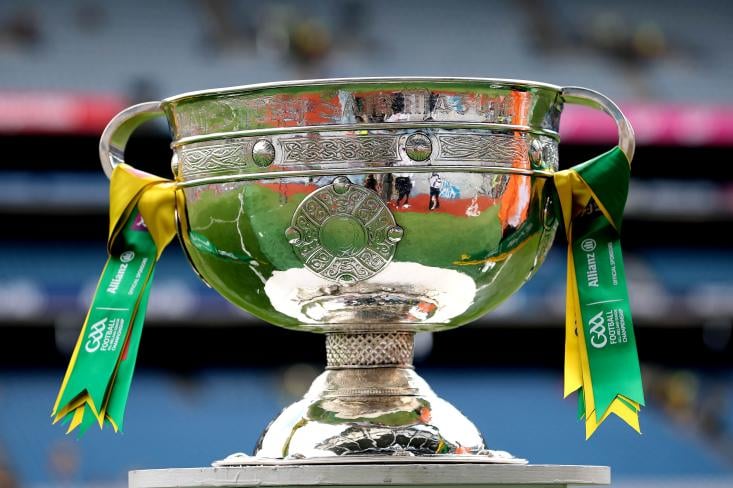
It's rare that the Sligo hurlers upstage their football counterparts, but that's exactly what happened in 2008 when the Yeats County captured the Nicky Rackard Cup for the first time. For Sligo's best-known hurler Paul Seevers, it was long overdue reward after over 20 years of largely unnoticed service in the all-black jersey.
In a year when Sligo footballers went from Connacht champions to Tommy Murphy Cup also-rans, it was left to their hurling counterparts to restore the county's wounded pride.
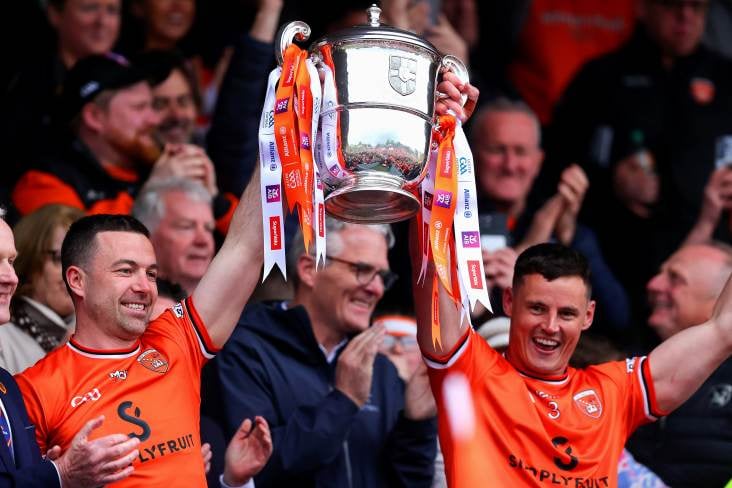
Sunday, August 3 was a red-letter day for Sligo hurling as the Nicky Rackard Cup was claimed for the first time following an emphatic victory over favourites Louth at Croke Park. And how fitting it was that arguably the county's greatest ever hurler, Paul Seevers, should play a leading role in the success.
The 38-year-old sharpshooter retired from inter-county hurling after 20 years of unstinting service at the end of last year, only to be coaxed back into the fold in April by fellow Tubbercurry man Mick Burke and his father Mick Seevers, who previously managed the county's hurlers and is now treasurer of the Sligo hurling board.
"I needed a break from it during the league because I has so much going on," he remembers.
"But come April they weren't really going to let me stay away from it! I said I'd give it a lash again and when I came back we started physical training down in Sligo IT. That went on for about 10 weeks so my fitness picked up a lot after that."
Seevers, who notched up 2-30 in Sligo's five-match campaign, including 1-4 in the final, is unsurprisingly delighted he came back. He cannot stress enough how much of a big deal it was for Sligo to win a major hurling final in Croke Park.
"This is a huge thing for Sligo, and to have done it in Croke Park made it all the more special. It is for the guys behind-the-scenes in Sligo hurling as much as the players. They've kept it going through the good times and bad times. Mick Burke is from Tipp but he's been living in Tubbercurry now for 50 years and he's done amazing work.
"My own father is from Galway and he's been in Tubbercurry for 40 years, and it's brilliant for people like them. Hurling is making great strides and we now have six senior clubs in the county - Tubbercurry, Calry/St. Joseph's, Tourlestrane, Naomh Eoin, Western Gaels and Coolera/Strandhill. Our under 16 team also reached the All-Ireland 'C' final this year and while they were narrowly beaten by South Down after leading at half-time, it shows the progress that's being made."
The Nicky Rackard Cup final proved a triumphant return to Croke Park after a 22-year lapse for the three-time Railway Cup medal winner with Connacht.
"I'm on the road a long time now at this stage. I played in goals in the All-Ireland minor 'B' final in Croke Park in 1986 but didn't get back there until this year. It was great to get the chance to play there again and great to see a big turnout of Sligo supporters. It's not often that Sligo gets to play in Croke Park in either hurling or football, so when we do get there, we always bring big support.
"Our midfielder Johnny Mullins, who also coached the county minors this year, brought the Cup around to the schools after the final and got a great reception. There is a great buzz in Sligo hurling at the moment and long may it continue," he enthusiastically adds.
Sligo's success was all the more remarkable considering that they lost all five of their games in Division 3A of the National League. Their league performances prompted former Galway star Frank Burke to step down as manager, and he was succeeded in the position for the Nicky Rackard Cup by former Sligo dual player Mickey Galvin, who was assisted by selectors Martin Walsh, Tom Brennan and Henry Cox.
"We didn't have the best of league campaigns and Frank Burke obviously felt it wasn't worth his while travelling up from Turloughmore for training a few times a week. Coming from a strong hurling county, he probably expected more from us. But then Mickey Galvin came in and we never looked back after that. It was a real rags-to-riches story."
Galvin oversaw a dramatic turnaround in Sligo's fortunes that started with a 3-15 to 1-7 victory over Cavan in the opening round at Markievicz Park. The visitors got off to a perfect start when Philip Brady raised an early green flag, but Sligo hit back with three quick goals from Aidan Walsh, Joe Bannerton and Seevers to lead by 3-10 to 1-5 at half-time, and there was no way back for the visitors in a low-scoring second half.
Sligo booked their place in the quarter-finals with a hard-earned 1-15 to 2-10 victory over Warwickshire at Pairc na hEireann in Birmingham. The home side led by 1-6 to 0-6 at the interval thanks to a Wayne Healy goal and although Enda Barron added another major on the restart, Sligo were not to be denied and made sure of the win when Keith Raymond fired to the net.
Raymond and Seevers scored 1-11 between them as the Yeatsmen saw off the challenge of Tyrone by 2-15 to 2-11 in a tense last-eight tie at Markievicz Park. Favoured by the wind in the first half, the visitors led by 1-6 to 0-6 at the break thanks to fine contributions from Cormac McHugh and David Lavery.But despite a McHugh major in the second half, goals from Joe Bannerton and Raymond saw Sligo battle back to win.
Mickey Galvin's charges sealed their place in the final when they brought Fingal's debut campaign to an end with a 1-16 to 0-11 victory at Markievicz Park.
The Dubliners suffered a blow just before half-time when full back Sean Sullivan received his marching orders, and they went into the break trailing by 0-6 to 0-9. But despite good scoring contributions from John Sheridan, Emmet McCabe and David Moran, the 14-men ran out of steam in the closing stages as the evergreen Paul Severs, who finished with 0-10, and goalscorer Joe Bannerton fired the home side to a decisive win.
Sligo went into the Croke Park decider against Louth as underdogs, but inspired by a five-star performance from full forward Keith Raymond, they upset the odds to run out impressive 3-19 to 3-10 winners. Raymond proved a constant menace to the opposing defence, scoring a whopping 1-8 from play, including Sligo's opening goal after 14 minutes when he beat Louth goalkeeper Stephen Smith with a low drive.
Up until then, Louth had held the upper hand, having opened up a 1-3 to 0-1 lead by the seventh minute. But between the 10th and 31st minutes, Sligo outscored the Wee County by 2-9 to 0-1 to set up their victory platform. Corner forward Joe Bannerton supplied the second goal for the Connacht side, hitting a ground shot to the left corner in the 25th minute.
Seven minutes later, Shane Kerrigan set up Ronan Byrne for Louth's second goal, but it was Sligo who held a comfortable 2-12 to 2-5 lead at the break. A third Louth goal within five minutes of the restart reduced Sligo's advantage to five points and with 13 minutes remaining, just four points separated the teams.
But Seevers put the issue beyond doubt when his 50-metre shot from the right wing deceived the Louth 'keeper and ended up in the top corner of the net, and the final whistle sparked joyous scenes among the Sligo supporters.
"Even though we had a torrid league, the omens were good for us throughout the Rackard Cup campaign. We got home draws for both the quarter-final and semi-final, and without them, our task would have been that much harder," says Paul, who has yet to decide if he will return next year.
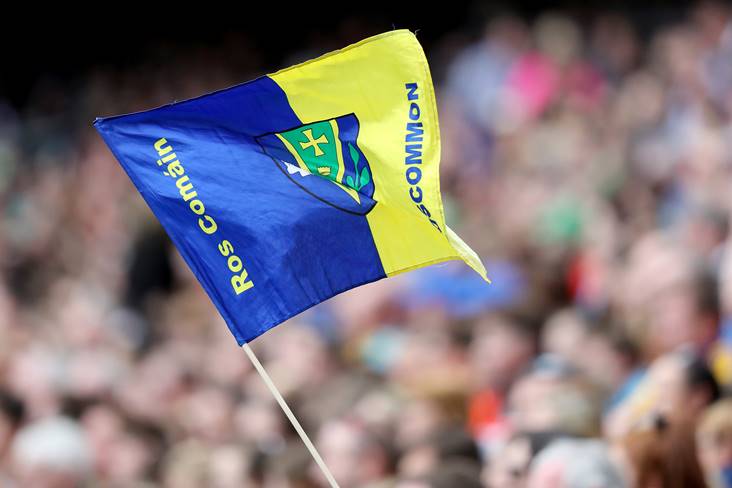
Sligo will once again compete in the third tier championship in 2009 after losing a promotion/relegation play-off to Roscommon the week after their Croke Park success. But while he's a big fan of the Christy Ring and Nicky Rackard Cup competitions, Seevers still feels they need some slight tweaking.
"I just think they're fantastic competitions. They give the weaker counties something huge to aim for. After the league in April we went and played Longford, Monaghan and Roscommon in challenge matches. They were really good games because all the sides were preparing for a championship.
"There are a few things that might need to be ironed out. Playing the matches off so fast every week can take it out of players and I think there should be a two-week break between some. We were fortunate in that we had two excellent physios in Therese Devanney and Conor Kenny to get us right before games. And the situation where the Christy Ring final was played outside Croke Park wasn't right.
"But still, as an idea it is a great one. It promotes the game superbly and is a huge incentive for players."
Most Read Stories