Great Northern Brewery proud of its GAA links
November 30, 2008
The Great Northern Brewery in Dundalk has made an enormous contribution to the local economy over the past half century. So too have many of its staff to the local GAA scene, including Louth legend Stephen Melia, who is employed as a Continuous Improvement Engineer. Operations Manager Pat Treacy explains more.
Like the GAA, the Great Northern Brewery has a long and illustrious history in Co. Louth. The brewery, which is the second largest in Ireland after St. James' Gate, has been part of Dundalk's commercial life since 1960, but the local tradition of brewing goes back many centuries.
"We've been in business in Dundalk for a long time and in that time we've forged very strong links with the GAA," Operations Manager Pat Treacy proudly states.
"Over the years, many of our staff have been involved in the local GAA scene and that remains the case today. The GAA is the biggest sport in Louth and is a daily topic of conversation in the brewery."
Undoubtedly the best-known GAA figure currently employed by the Great Northern Brewery is Louth great Stephen Melia. Employed as a Continuous Improvement Engineer, Stephen was a stalwart of the Louth football team throughout the 1980s and 1990s, but his only reward was an All-Ireland 'B' winners medal in 1997 when the Wee County defeated Clare in the final to capture their first major title in 36 years.
Stephen was short-listed for the centre half back position on the Louth Team of the Millennium, which was filled by 1957 All-Ireland hero Jim McArdle. He played most of his club football with John Mitchel's, but finished his career in the colours of St. Joseph's, with who he won his first and only county senior championship medal at the ripe old age of 44 in 2006.
It was long overdue reward for Melia, who as well as training the team, produced a man of the match performance in the Joe's surprise defeat of St. Patrick's. Since then, he has served as a Louth selector under manager Eamonn McEneaney.
The Great Northern Brewery's Finance Manager, Noel Connolly, is also actively involved in the GAA as manager of the Dundalk Gaels minor team. And the connections don't end there - as part of Diageo plc, which also owns Guinness, the company has close ties with the All-Ireland hurling championship.
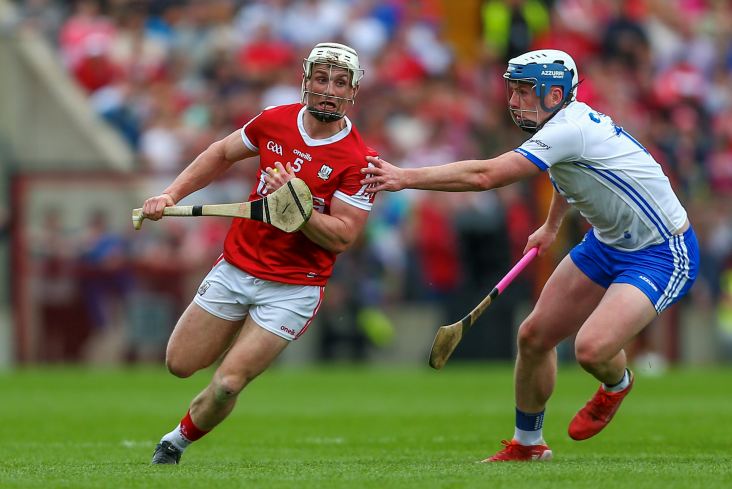
"We are very proud of the fact that Guinness has sponsored the All-Ireland hurling championship since 1995. The sponsorship has been a huge success from both Guinness' and the GAA's point of view. Guinness brought a whole new approach to promoting hurling with its innovative sponsorship and advertising campaigns, and the game has certainly benefited from that," says Pat, who hails from Clonskeagh in Dublin, where he played with the local Liffey Gaels GAA club in his younger days.
Over 20 different beers are produced at the Great Northern Brewery which, with a staff of 85 and a further 30 indirectly employed, remains one of the largest employers in Dundalk. These are employed across a range of disciplines including production, supply, customer service, technical and quality control.
Among the brands brewed on-site for the Irish and export markets are Harp, Smithwick's, Kilkenny Irish Beer, Satzenbrau, Carlsberg, Tubourg and McArdles. Harp, which is the brand most associated with the brewery, is Northern Ireland's best selling lager, while it is also popular in Dundalk, Kerry and Donegal.
The Carrick Road plant produces 1.6 million hectolitres of lager and ale annually, which translates into 300 million pints. 180,000 tonnes of Irish malt is supplied to the brewery annually.
Harp Lager has a long history of sponsoring major sports teams and events in both the Republic of Ireland and Northern Ireland, including Dundalk FC (from the mid-1980s to the beginning of this century), the Belfast Giants ice hockey team and the FAI Cup.
Diageo's association with brewing in Dundalk dates back to the late 1950s, when the Great Northern Brewery was bought by Irish Ale Breweries of Kilkenny and subsequently by Guinness.
Up to that time, the brewery had produced stout and ale. However, in response to demand for a quality domestic lager, Guinness undertook a major investment programme, transforming the brewery into a modern lager operation. Working with German master brewer, Dr Hermann Muender, and local ingredients, Harp lager was created.
Within 12 months of launch in 1960, Harp had become a household brand throughout Ireland. A year later it was launched nationwide in Britain. This success meant that the brewery's capacity had to expand tenfold to meet demand.
Today, the brewery has extensive facilities and it produces and packs a collection of beers and ales. The story of the Dundalk brewery is one of continuous improvement and innovation. Substantial investment has seen the addition of a new brewhouse, additional fermentation vessels, a pall filtration plant and a carbonation/nitrogenation plant in the existing filtration centre.
The brewery has implemented state-of-the art processes. Industry leading technological infrastructure has led to increased productivity in the brewhouse. All stages of the brewing process are monitored technically to ensure the highest standards, as well as being checked by the skilled tasting staff.
The Great Northern Brewery is approved for the ISO 9000 and ISO 14000 quality and environmental standards. In the on-site laboratory, skilled staff conduct in-process testing, checking each brew at critical stages of production. Tests are assessed immediately and adjustments undertaken quickly, to optimise production performance.
Diageo invests in both skills and technology at each of its breweries to ensure it benefits fully from changes in brewing processes. Dundalk has seen a significant skills development programme. As a result, the production capacity of the brewery continues to expand while meeting rigorous quality standards.
This attention to detail is matched in the packaging area, where all kegs and packs are checked and coded which supports product traceability.
Raw ingredients, produced and delivered to Diageo's high specifications, are sourced nationwide. All ingredients are assessed upon receipt and before being introduced into the brewing process. This level of control delivers consistent quality across a range of beers and ales so that the consumer experiences the perfect drink on every occasion.
In conclusion, Pat says: "On behalf of the Great Northern Brewery, I would like to wish Louth GAA every success in 2009 and hope to maintain our strong relationship with its clubs and members for many years to come."
Most Read Stories