Match reports plus background story (972 words)
In the city of dreaming spires and chinless wonders, there is a corner of a foreign field that is for ever
Ireland. Well, to be exact, there were four corners, two sets of goal posts and a lot of pale legged
students, but on Saturday, the 29th April, the centre of the GAA universe shifted east from Croke
Park, just for a few hours, to University Parks, Oxford, and the inaugural Varsity GAA Tournament.
Oxford University played host to four Cambridge University teams competing in mens' and ladies'
gaelic football, and, for the first time, in camogie and hurling.
Camogie was the first order of business, with Cambridge wearing their renowned light blue, while
Oxford, in a break with tradition, eschewed the university's dark blue in favour of the green and gold of
…ire "g Oxford, the city's GAA club whose roots reached back to the 1960s. Lead by captain Sinead
Forde, recently selected for the British University Camogie Allstars, Oxford chalked up 8 goals and 2
points against a stunned Cambridge team that failed to register a point on the scoreboard.
The torrent of goals from Forde and teammate Catherine Hanna had the home crowd on their feet, and
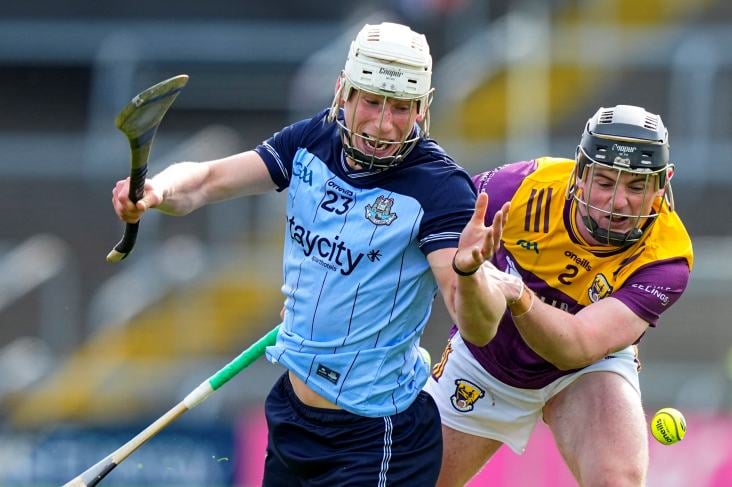
set the scene for a second emphatic Oxford victory in the hurling match where the midfield pairing of
computer scientist Cormac O'Shea and economist Alan Ryan dominated the field absolutely. Cambridge
battled on, but there was a depth of talent and experience in the Oxford team, including that of Comer
himself at wing forward, that they could find no answer to, and Oxford marked their second victory of
the day with a score line of 6:11 to 2:1.
The switch to football raised Cambridge hopes of ending the day on equal terms with their hosts.
Oxford's ladies were in no mood to be hospitable however, and Cambridge were punished mercilessly
by Hannah Bowe at midfield. Oxford's ladies soundly beat Cambridge at their own game in a tightly
marked match that yielded a low winning scoreline of 1:3 to 0:1.
It was left to the Cambridge mens' football team to pull something from the ashes, and their confidence
was surely boosted as they saw Oxford's hurlers retake the field for their second match of the day
facing a largely fresh squad of Cambridge players. But nothing can take away from the display of
fielding and shooting given by Vinnie McCaughan, whose early point scoring left Oxford facing a sharp
uphill struggle. Oxford dug deep in the second half, and following the ferociously committed examples
of varsity rugby player Johnny Fennell and the tenacious Andy Grant, they clawed back at Cambridge's
lead but could not match the visitors' impressive marksmanship. The day finished with a Cambridge
victory of 1:3 to 4:11 in football, an overall tournament victory of 3-1 to Oxford and with cause for
celebration for both teams and their supporters.
There have been nine previous Varsity matches between gaelic football teams from the two
universities. Moving back through this history, statistics give way to hearsay, but if Cambridge are to be
believed they had taken five of these titles to Oxford's four. What is certain is that, the fixture was
abandoned in 2005 with GAA clubs in both universities in disarray. This year, as Cambridge University
Gaelic Athletic Club began a football revival, something entirely new was happening in Oxford. Anthony
Comer, an engineer from Co. Galway, was undertaking the thankless job of setting up a hurling club in
a university where the very mention of 'hurling' left his peers with an image of him either as
competitive projectile vomiter, or scrubbing his way to the winter olympics. Once puking and curling
had been explained away, Comer still faced the challenge of keeping a straight face when answering
the inevitable question, "but isn't that dangerous?" "Ah no, - not really."
However, Comer found a fellow traveller in fellow Galwegian, Sinead Forde, who, despite doctoral
research in immunotherapy, rowing and cross country running, was finding her time in Oxford
unfulfilled in the absence of camogie.
While the Irish footballers in Cambridge could rely on the ever-reliable Aussie Rules players to adapt to
a round ball, Oxford was assembling a cosmopolitan constellation of Canadian, Dutch, English, Israeli,
Swiss, Scots and Welsh hurlers before Irish students began to hear the rumours of the club's existence,
and the reports of ash on ash in the distance. Once the numbers began to build, Oxford's hurling
machine (a minibus rented by the day) hit the road.
While both Oxford and Cambridge competed in their respective codes around the UK, both teams would
have to diversify in order for the grudge match of the year to happen. Cambridge widened their remit to
include hurling, and Comer grudgingly agreed to leave the small ball aside, on a strictly temporary
basis. Meanwhile, Sinead Forde and Cambridge ladies captain, Aveen Kelly, nudged, cajoled, bullied and
bribed women of all academic disciplines and nationalities in order to fulfil their own dual code brief.
The culmination of all this effort was marked last Saturday, as the camogie teams took to the field to
begin the Varsity tournament.
The players generated a new level of recognition and respect for gaelic games within their universities
and cities, and both clubs anticipate next year's fixtures in the Fens, where Cambridge will seek
revenge and Oxford will raise their sights to a clean sweep of the honours. In the meantime, both clubs
will have to struggle with the limited resources available to 'minor ' sports in their respective
universities, but both will go on to recruit in earnest, and to compete wholeheartedly. Just don't
mention curling.
(Cambridge University Gaelic Athletic Club would like to thank their sponsor, Magners Irish Cider.
Oxford University Gaelic Athletic Association are currently seeking sponsorship for 2006-2007. Please
contact [email protected] for further details.)