KEVIN McSTAY column
June 14, 2007
Defending is easier than attacking
When aficionados of Gaelic football gather in twos and threes to discuss the evolving strategies and tactics in our game a story from deep in the county of Derry is always worth recounting. This true tale took place in every dressing room the coach practiced his art (or is it more correctly called a science?) and constituted his final words as you prepared to exit for the field-door open or not!
And his cautionary advice was this: pay the greatest attention to the way you defend, keep your concentration and plug every gap that appears; and remember that even if you score twenty of the most beautiful points (does an ugly one count the same?) you are still not guaranteed victory. But should you keep the other side scoreless, defeat cannot be countenanced.
It is stretching things a bit too far but it underlines the coach's approach and underpins his philosophy. Perhaps the art of defending has always been a priority with teams in every field sport. After all the top Premiership managers in soccer tell us you can win nothing without an outstanding defence. The ability to keep a clean sheet, restrict scores in times of pressure and the final 'scores against' column will ultimately determine where your season ends.
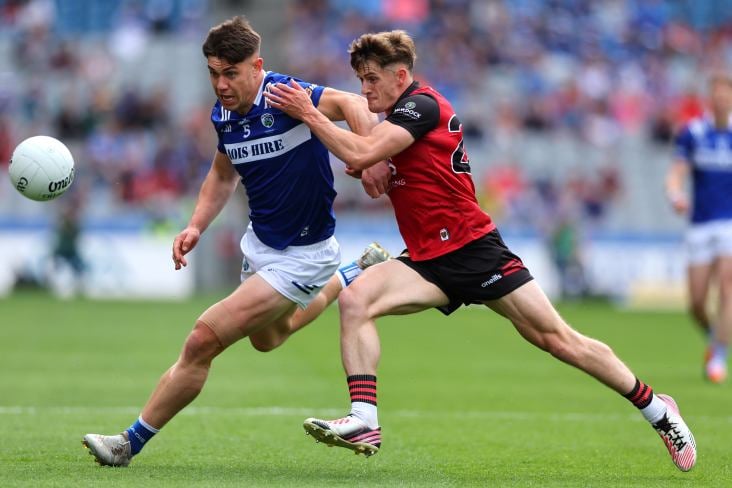
There can be no argument which skill is the more difficult. Defenders face the ball, their objectives are to defend, mark tight, tackle hard and clear quickly and long. The field they must clear to has a panorama bordered by two sidelines nearly 100 metres apart and the bonus is getting your clearance to a player with a shirt colour the same as yourself.
The forward has his back to the goal, must pass accurately and shoot with even greater precision to land the ball between the two posts; sometimes he is expected to get it under a crossbar at the same time!
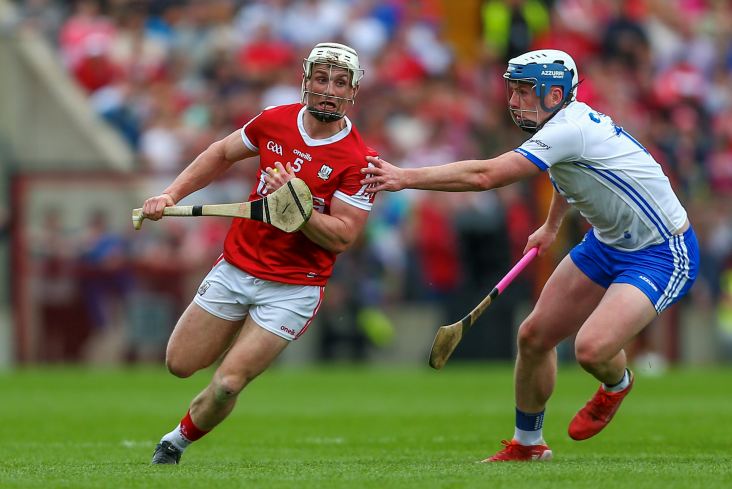
The life of the attacker is not an easy life - his markers are getting stronger, faster and in terms of skill they are improving too. No rest for the afflicted. And the modern managers are totally committed to the idea that 'Defence is King'. They hunt in packs, looking for the slightest hint of anxiety before they collapse, together and at once, to steal the precious pill from your hand.
The referee is always a former defender too; poor forwards are too spent, warped, buckled and often broken to take to the whistle. No, it's always a bad corner back from the era of the Dubs v Offaly when men were men. And upon graduation to the Knights of the Whistle they make a solemn promise to their Order: 'I shall referee it as I played it'.
These days things have improved and unfortunately for the forward men, the backs are improving at a serious rate of knots. The defending in the recent Donegal versus Armagh clash highlighted where exactly the science is at the turn of the millennium. And there is a certain fascination involved in witnessing these attritional days when pace and power gather in groups and blankets to hunt their prey down.
For the most part it appears legal; if it is legal for one man to defend with aggression within the rules, then it must be fair for ten to do so. So long, of course, they do not foul. And those fouls include holding, use of the knee, closed fist, high hits, frontal charge and so on. But they are done at great speed and once the big hit is applied the hands are pulled back to allow daylight.
That is the real art as the referee is caught in the glare of the movement and it appears all is well. It becomes almost impossible to really know for sure if a foul is being committed.
What is one to do? Pull up every infraction and kill the flow of the game? Apply common sense and a certain leniency? To do so, referees must step outside the rules and join the offenders themselves by failing to uphold the laws of the game. And when they do, they are an easy target for both the assessors and the TV analysts. Caught between a rock and a hard place!
A home draw
covers all ills
The championship to date really has been the preserve of the home team. We know the advantage of the home venue confers a points bonus during the league but it appears the red-hot championship football of summer, when teams are at their peaks, very often comes down in favour of the first side out of the hat.
As I write, Dublin are about to show once again how valuable an asset Croke Park is. Already through the hoops we have teams such as Down (after a draw away from home when playing Cavan), Galway in Pearse Stadium over Mayo, Longford over Westmeath in another field named after our 1916 hero; Ballybofey and the way it sucked the ball into the net for the Donegal winner over Armagh. Throw in Cork and Waterford and you realise that the only away wins so far have been 'away'-Sligo and Leitrim winning in New York and London respectively!
Round 1 of the Qualifiers will be the big story of the 2007 championship. Just look at the contenders and remember they all go into the one bowl with, you guessed, first team out getting the prize of home venue. The list already includes Mayo, Armagh, Limerick, Cavan, Westmeath, and still more to come; one from Tyrone or Donegal, whoever loses the Dublin v Meath game will be joining them. Kildare are there and a few more will tog before June is out.
The likely departure of the 2008 Division 4 teams (they must get to their respective provincial finals to get into the Qualifiers for this year) is regrettable but blame goes to the county officials - they resembled turkeys voting for Christmas as the Special Congress wound down. Summer will hardly have started and we will already have said goodbye to Clare, London, Waterford, Tipperary, Wicklow, Carlow, Offaly and Antrim. There was a better way if only they stood up for themselves - at a minimum winning Tommy Murphy should have provided a re-admission ticket
Most Read Stories