Yellows and mid season rule changes
July 05, 2010But the statistics reveal the total issued per match is ranging from six to a dozen yellows with Ulster leading the charge. This is often attributed to the appointment of southern-based referees who, it is argued, fail to understand the 'nuances' of the northern game. But that does not hold water this season as most of the Ulster fixtures have featured their own whistlers.
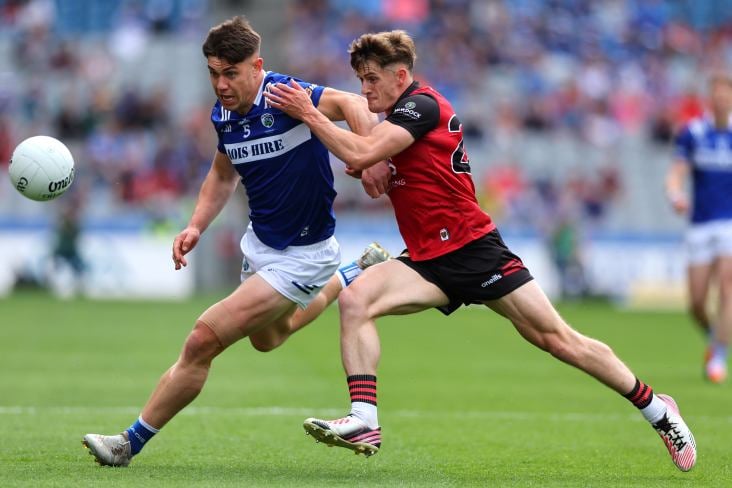
An aspect that many supporters are failing to pick up on is the pressure yellow cards are putting on players once they have received them and the manner in which the opposition then focus on defenders who carry them. Indeed it is well accepted that once sanctioned, mangers think immediately of substituting those players especially if faced with a ball carrying forward or a defender with a reputation. If you pick up an early yellow, unless you are a very experienced performer, you can expect to see the bench if the manager wants to use a substitute early on.
A second and more cynical aspect is the manner in which those players who have not come to the attention of the referee use their clean slate to tactically foul and disrupt comebacks or just break up the play and momentum when their team leads with a few minutes left on the clock. These fouls are committed high up the field and disrupt opposition patterns in a way that prevents the ball getting into the opposition half quickly. We really should have a better rule to deal with this but at present we don't.
And while managers look to gain advantage, the critical millimetres that separate the winners from the losers, they might be better served to examine the recently launched Fair Play Award and note the correlation between the best league performers and the teams with the best behaviour on the field.
This was an initiative by GAA HQ to reward teams that demonstrated a commitment to playing within the rules. The manner in which the index is compiled could hardly be simpler: each team is given a single point for each yellow card awarded in a game and increasing points for red cards depending on the category reported and suspension awarded. Each game is totalled and added to the other games in your league division and the number of games played divides the total at the end. A low index points to a well-disciplined team and not surprisingly, teams heading up this particular table tended to do very well indeed.
Limerick topped the Fair Play Index with a mere 15 cautions from their 9 games and ended with an index of 1.67 per game. They got promoted from Division 4 and would you believe also won the league final when it was played in Croke Park. They picked up a €10,000 for their efforts too! And as write this piece, they have worked their way back into a Munster final for the second year in a row.
In the hurling national leagues, three of the counties playing in the Division 1 and 2 finals found themselves at the top of their Fair Play Index. Clare, Cork and Galway registered low indices and again, find themselves doing very nicely in this years hurling championship. It all suggests that teams with a greater level of personal and team discipline rise to the top but then that is something all mangers should know by now. Right?
Rules changes mid season are not acceptable
It seems like a long time ago since the great and the good of the GAA world gathered in County Down to wade their way through annual Congress but as we head deep into summer, the ramifications of that get together are still being felt on the playing fields. You will recall most of the trialed rule changes met a quick death and then out of the blue, an amendment to the hand pass, a change that failed to be trialed, made it all the way into the rule book.
Sponsored by the Connacht Council, this rule, in time, will be a major improvement but the wonder is the manner in which it came to life. The end result was the early stages of this year's championship threatened to bring the game into disrepute as referees, in particular, could not distinguish between a fair hand pass and an illegal one.
As ever, the opening rounds were sacrificed to the alter of trial and error and only a change of heart by the referees body led to some light and the possibility of phases of uninterrupted play. Many of the teams to suffer were in the so-called 'weaker counties' category but the Lessons Learned Department in GAA HQ will surely have examined the manner in which they engineer and execute experimental rule changes. In truth, it is a shambles.
Every fifth year, teams play under one set of rules from January to a date that is four weeks after Congress sits (early May) and then must adjust, in this case without a period of trial, to a new rule.
It's crazy and the simple solution is to put off all changes until the January following the Congress and thus avail of provincial and national leagues to iron out the creases that usually arise. By the time championship comes around the supporters, the players but most importantly, it would appear, the referees will be familiar with the new rule and all will be well in the GAA world. Tweet