The GAA - A People's History
November 05, 2009
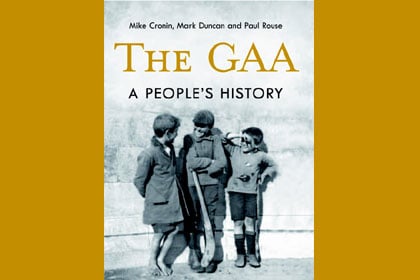
The GAA - A People's History
Commissioned by the GAA to celebrate GAA 125
The GAA - A People's History
Mike Cronin, Mark Duncan and Paul Rouse
Published in October 2009
Price: 29.99/£26.99
This book has been selected for the Great Irish Book Week. When you purchase this, or any other title displaying a GIBW sticker between 24 and 31 October, you will receive a free copy of Be Inspired - Gems from Irish Publishing, a 240-page book containing extracts from 30 Great Irish Books. See www.greatirishbookweek.com for details.
Ireland without the GAA is unimaginable. As the Association moves past its 125th anniversary, this is the story of how it carved for itself a unique place at the heart of Irish life. It outlines how Gaelic games and the social world, which revolves around the Association, has shaped the lives of generations of Irish people at home and abroad. From parades and ballads to epic journeys across land and sea, this history of the GAA is as much about what happened off the field as what happened on it.
Lavishly illustrated with previously unseen photographs and original historical documents, this is a book with absorbing insights into a world that is both uniquely Irish, yet has a global reach. It sets the GAA experience in the context of an island in the midst of significant change. Political revolution, social upheaval and a shifting cultural landscape are all reflected in the story of the GAA. It documents the successes and failures, the controversies, the diversity, the passion and the sheer fascination of life with the GAA. This book is about how generations of Irish people have spent their time in the hours between work and sleep, in thrall to their games and the Association that organises them.
The three authors are directors of the GAA Oral History Project. Commissioned by the GAA and based at Boston College-Ireland, this is the largest sports history project of its kind and aims to record the rich, diverse and complex history of the Association through the words of local people in every parish of the country and among Irish communities overseas.
Mike Cronin, academic director of Boston College-Ireland, has written widely on Ireland's history. His books include The Blueshirts and Irish Politics (1997), Sport and Nationalism in Ireland (1999), and Irish History for Dummies (2006). He contributes to radio and television on Irish and sporting history.
Mark Duncan, a director of the InQuest research group, has worked extensively with RTE Current Affairs and various academic institutions. Central in establishing the GAA Museum at Croke Park in the mid-1990s, he has written widely on the GAA and its history.
Paul Rouse, formerly an award-winning journalist with Prime Time in RTE, has written extensively on the history of Irish sport and on the GAA. He is a lecturer at the School of History and Archives in University College Dublin and is a director of the InQuest research group.
The GAA - A People's History is divided into thirteen chapters that signify the essentials of the GAA
Ch1 Beginning: Lizzie Hayes' Hotel in Thurles, County Tippeary was the place to be on Saturday 1 November 1884 for the establishment of the Gaelic Athletic Association.
Ch2 Games: Some protested the development of rules but the GAA rules quickly became the norm. One thing is certain: rules are adhered to but the only style that is adopted by any club or county team is the style that will win.
Ch3 Travel: In July 1898, there were so many Tipperary Gaels on the train to Cork that the engine couldn't pull the carriages up the hill between Limerick Junction and Emly. Today on a summer Sunday in Dublin, trams on the red line of the Luas often resemble game-day specials packed with supporters from outside the capital making the carriages their own.
Ch4 Places to Play: Not every club had a pitch to play from the beginning. When the GAA started out, the notion of sports clubs having dedicated facilities was a new one. Now every parish has its own GAA club and pitch.
Ch5 Politics: In 1888, the IRB elected their members as ex officio members of every club committee and no GAA event could take place without their permission. Troubles in the North exerted new pressures on the GAA. Today, it continues to evolve in line with the politics of Ireland.
Ch6: Media: P. D. Mehigan's commentary of the 1926 hurling semi-final between Galway and Kilkenny was the first radio broadcast of a GAA match. It was also one of the first sports broadcasts in Europe. The explosion in media coverage since the beginning of the GAA would have stunned the founders.
Ch7 Community: From the beginning, the stress was on 'local'. Establishing an identity with 'place' was important because it helped the GAA to spread into every corner of Ireland.
Ch8 Religion: The clergy always had a special place in the GAA, including the best and comfiest seats at matches - many were seated in armchairs on the sidelines to ensure the perfect view!
Ch9 Music, Parades and Culture: A GAA-day out is a unique cocktail of sport and drink and music and pageantry. The first performance by the Artane Boys' Band was on 14 June 1886.
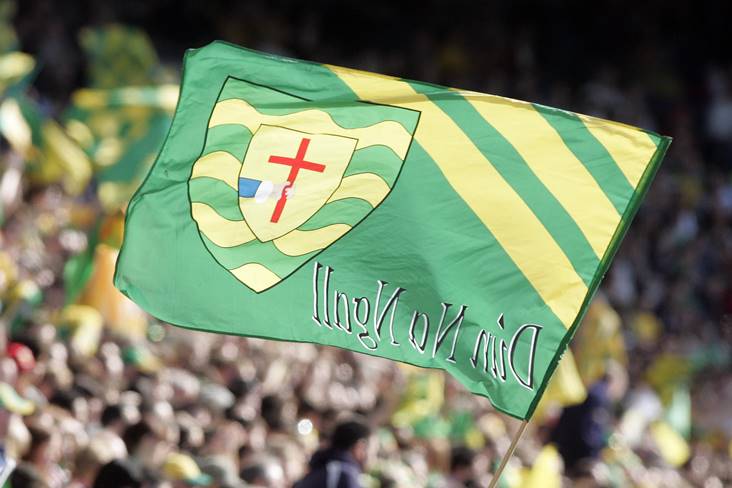
Ch10 Hats, Flags and Rosettes: Over the years, the 'uniform' of players and supporters have changed from Sunday best to club and county jerseys - another way to cement the connection with 'place'.
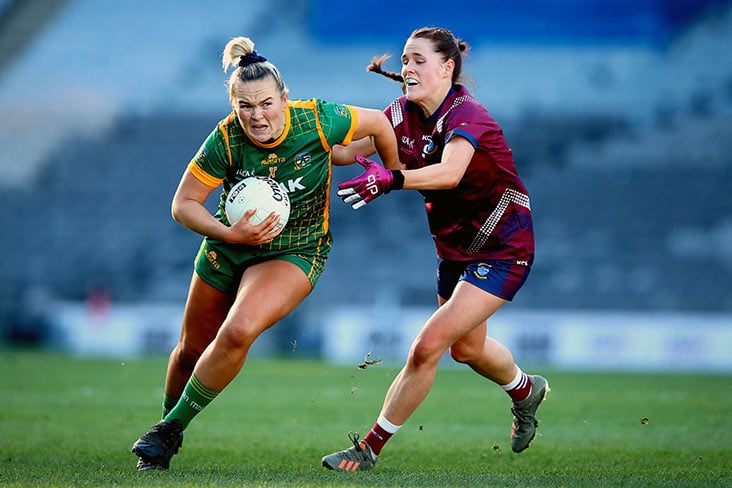
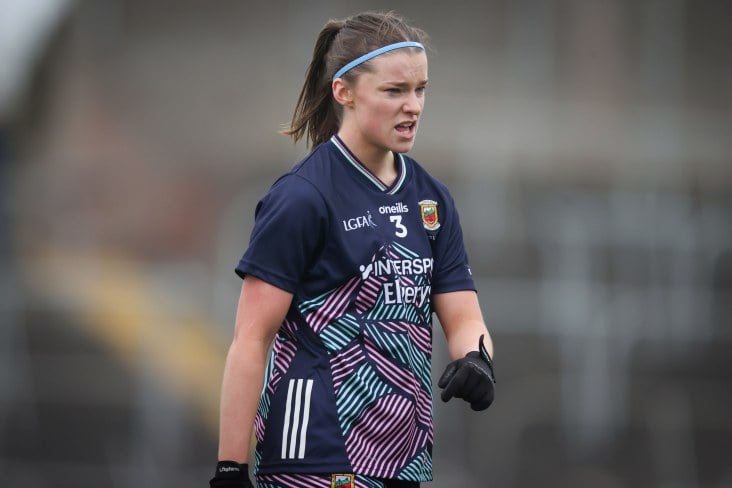
Ch11 Women and the GAA: 'It is a simple fact that man walked on the moon before woman played football in Croke Park.' Women playing Gaelic games may have been seen as a joke initially but they quickly won admiration for their dedication and skill.
Ch12 Exile: Joe Connolly's speech in September 1980 linked Croke Park to the thousands of Irish people spread across the globe who maintain their link with home through the GAA.
Ch13 Crossroads: Gaelic games are not merely contests between teams but also between individuals.
Most Read Stories